September 9, 2026
Paint Protection for Electric Cars
Car Ceramic Protection • Brisbane
Paint Protection for Electric Cars: What Every EV Owner Should Know
Electric vehicle paint behaves differently to a traditional car, and that changes how you protect it. Here is what makes EV paint unique and how to keep it looking factory-fresh in Brisbane conditions.
15+
Years Experience
7,000+
Vehicles Protected
10H
Coating Hardness
3
Studio Locations
Electric vehicles are now a common sight on Brisbane roads. You will see everything from Teslas to newer models from BYD, Polestar, Kia, Hyundai, and Zeekr. Most EV owners research battery range and charging in detail. The paintwork, however, often gets overlooked. And EV paint has some genuine differences worth understanding before you decide how to look after it.
Why Electric Vehicle Paint is Different
Many electric vehicle manufacturers apply thinner, more environmentally friendly paint systems than traditional combustion vehicles. They often use water-based paints with reduced clear coat thickness, part of a broader push toward lower-emission manufacturing. This is better for the environment. But it can leave the paint surface more prone to swirl marks, scratching, and chip damage than the thicker systems on many older vehicles.
Electric vehicle paint is often thinner and softer than traditional automotive paint. Many manufacturers use eco-friendly water-based systems with a reduced clear coat. This can make EV paintwork more prone to swirl marks, scratching, and stone chips. That makes early paint protection especially valuable for electric cars in Brisbane.
Thinner Clear Coat
Reduced clear coat thickness means less margin for correction over the vehicle’s life. Protecting the paint early preserves what is there rather than relying on repeated polishing that removes clear coat each time.
Softer Paint Surface
Softer water-based paint marks more easily during washing. Correct wash technique and a protective coating matter more for EVs than for many traditional vehicles.
Instant Torque, More Highway Use
EVs are frequently used for highway commuting, where stone chips and road debris are most common. High-impact front zones benefit from the physical barrier that only paint protection film provides.
Premium Resale Segment
EVs hold a premium position in the used market. Preserving factory paint condition supports resale value in a segment where buyers are particularly attentive to overall vehicle presentation.
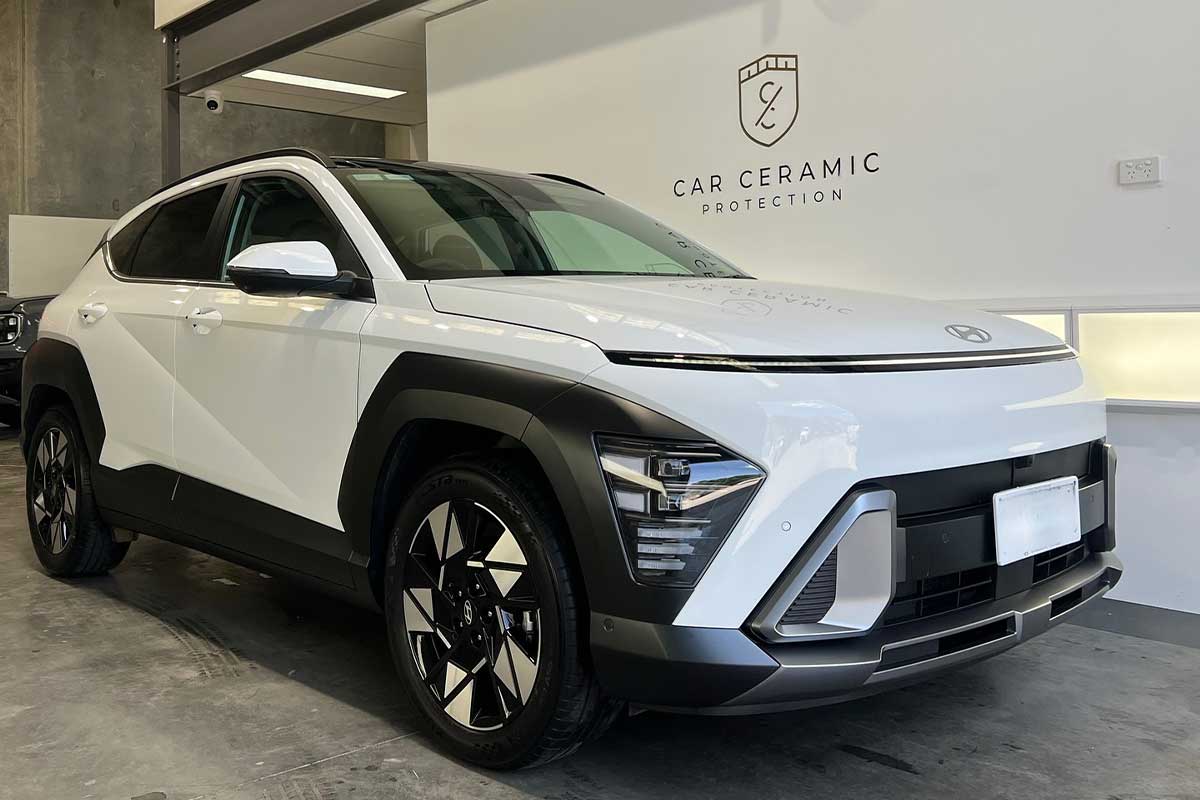
Car Ceramic Protection has coated a wide range of electric vehicles, including the Tesla Model X and the Zeekr 7X. Every EV goes through the same rigorous decontamination and paint inspection before any protective product is applied.
The Best Paint Protection Options for EVs
With softer, thinner paint on many EVs, the goal is to protect the surface before it degrades. That is far better than correcting damage after the fact. There are three main options. For many EV owners, the strongest result comes from combining them.
Ceramic Coating
The foundation layer
A liquid polymer that bonds chemically with the paint, rated 10H on the hardness scale. It blocks UV, repels water and contaminants, and resists the light swirl marks soft EV paint is prone to. Car Ceramic Protection uses GTechniq and the Kovalent Graphene Matrix coating. It is engineered to self-correct microscopic surface scratches over time.
Paint Protection Film
The impact barrier
A clear, self-healing SunTek urethane film applied to high-impact areas such as the bonnet, front bumper, and mirrors. Many EVs have thin, chip-prone paint and see regular highway driving. On the front zones, PPF is the only option that physically absorbs stone chips before they reach the paint.
Combined Package
The complete solution
PPF on the high-impact front zones for physical chip protection. Ceramic coating over the rest of the vehicle for UV resistance, gloss, and self-cleaning. This layered approach gives soft EV paint the most comprehensive defence available. It is a popular choice for higher-value electric vehicles.
Taking delivery of a new EV? The new car protection Brisbane package brings all of this together in a single coordinated treatment. It covers paint, PPF, alloy wheels, glass, leather, and fabric, protecting the entire vehicle from day one.
Why Timing Matters More for Electric Cars
With thinner clear coat, the case for protecting an EV early is even stronger than for a traditional vehicle. Machine polishing removes a small amount of clear coat every time it is done. On an EV, there is less of it to work with in the first place. Protecting the paint before it degrades avoids this cycle entirely.
The advantage of protecting an EV early:
- Factory paint is in peak condition at delivery, so little or no correction is needed before coating, preserving the limited clear coat thickness
- A ceramic layer makes safe washing easier, reducing the swirl marks that soft EV paint picks up during routine cleaning
- PPF on the front zones stops stone chips before they happen, avoiding touch-up or respray work on paint that is expensive to match on many EV models
- Andrew’s Car Care Plan, included free for the life of the coating, keeps the protection performing with an annual decontamination wash, inspection, and booster coating
Protection Tailored to Your EV
Car Ceramic Protection’s team assesses each electric vehicle individually. They recommend the right mix of ceramic coating and PPF based on the model, its paint characteristics, and how the owner drives. To discuss the right approach for your EV, contact our team or call 1300 300 100.
Frequently Asked Questions
Do electric cars need different paint protection to petrol cars?
The products used are the same, but the case for using them is often stronger with an EV. Many electric vehicles use thinner, softer, water-based paint as part of eco-friendly manufacturing. This can make the paint more prone to swirl marks, scratching, and chip damage than the thicker paint on many traditional vehicles. Ceramic coating and paint protection film both work extremely well on electric vehicles. Because EV paint tends to be more delicate, protecting it early is especially worthwhile. Car Ceramic Protection assesses each EV individually and applies the same thorough preparation used on every vehicle.
Is ceramic coating or PPF better for a Tesla or other EV?
They do different jobs, and for many EV owners the best result comes from combining them. Ceramic coating protects the whole vehicle against UV, contaminants, and light swirl marks. It also adds gloss and self-cleaning properties. Paint protection film is a physical barrier applied to high-impact front zones like the bonnet and bumper. It is the only option that genuinely absorbs stone chips before they reach the paint. For a chip-prone EV that sees regular highway driving, PPF on the front with ceramic over the rest gives the most complete protection. The team will recommend the right split for your vehicle at a free consultation.
When should I get paint protection on a new electric vehicle?
As soon as possible after taking delivery. A new EV’s paint is in its best condition on day one. That means little or no correction is needed before the coating goes on, preserving the limited clear coat many electric vehicles have. Protecting the paint early avoids the cycle of repeated polishing that removes clear coat over time. It also ensures no degradation occurs before the protective layer is in place. Car Ceramic Protection’s new car protection package brings ceramic coating, PPF, and interior treatments together in one service. It is typically completed within 24 to 48 hours, with a loan car provided.
Brisbane • Gold Coast • Melbourne
Protect Your Electric Vehicle the Right Way
Book a free, no-obligation consultation with the Car Ceramic Protection team. We will assess your EV’s paint and explain your options honestly. Then we recommend the right combination of ceramic coating and PPF for your vehicle.
Call us on 1300 300 100 • Speak to Andrew: 0447 755 730